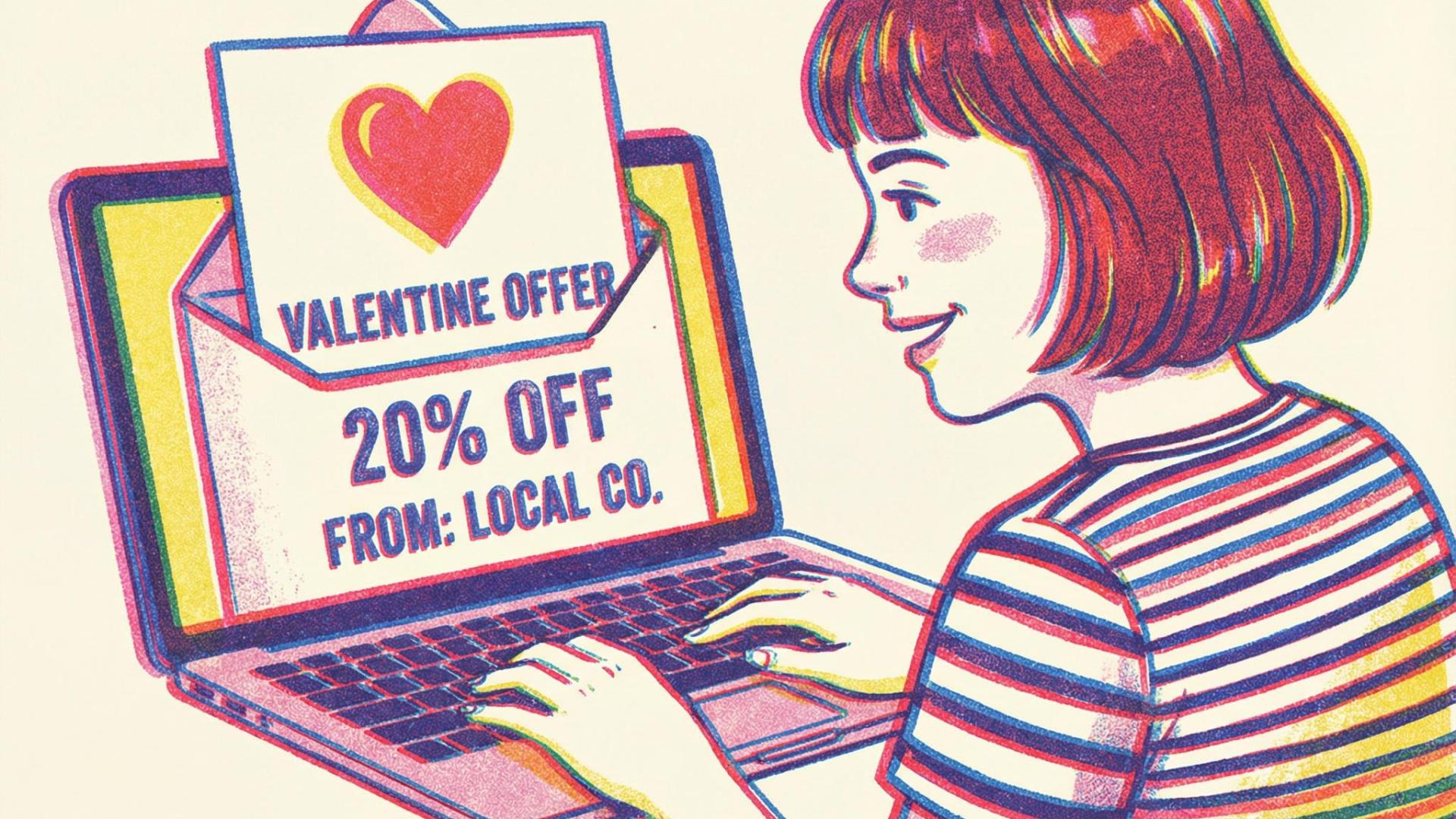
Most brands approach Valentine’s Day the same way: slap a heart on a discount code, blast it to their entire list, and hope for the best. That’s lazy. And it doesn’t work nearly as well as you think it does.
Valentine’s email campaigns deserve more creativity than a “20% off for your sweetheart” subject line. The data backs this up. Americans spent $27.5 billion on Valentine’s Day in 2025, according to the National Retail Federation. That is a massive pool of spending, and the brands that win aren’t the ones offering the biggest discounts. They’re the ones doing something people actually want to engage with.
A recent Jacquard study of 61,000 email subject lines found that generic romantic language like “love” and “heart” actually hurts performance. Meanwhile, personal language like “your Valentine” drove 22% higher engagement than “Valentine’s Day.” That tells you something important: people respond to creativity and relevance, not the same tired templates everyone else is using.
Here are 14 Valentine’s email campaigns I’ve seen work in the real world. Every one of these was actually executed for real clients. Steal what fits your business.
How Do You Make Valentine’s Email Campaigns Feel Inclusive Without Being Generic?
Start with themed roundups that don’t exclude anyone. This is often overlooked, but Valentine’s Day is not just for couples anymore. About 32% of shoppers now buy Valentine’s gifts for their pets, and 58% buy for family members, according to the National Retail Federation.
A grocery delivery brand featured cakes “for couples AND for treating yourself.” A liquor store chain sent out a brilliant “drinks for every stage of a relationship” email, covering everything from first date butterflies to comfortable couch nights. A balloon delivery service curated Valentine’s bouquets made entirely of balloons.
All of these drove solid click through rates because they made everyone feel included, not just people in relationships.
What Kind of Purchase Incentive Outperforms a Standard Discount?
Tease a bonus instead of leading with a percentage off. One coffee shop ran a “free drink if you kiss your partner at the counter” promo. The engagement was massive. Why? Because the intrigue element gives people a reason to talk about your brand. A mystery bonus or a playful challenge consistently outperforms a standard “15% off” in the tests I’ve run.
The lesson here is simple: make the offer feel like an experience, not a transaction.
Why Do Gift Guide Emails Convert So Well During Valentine’s Day?
Because people genuinely struggle with gift ideas. That’s the real opportunity here. A jewelry brand sent targeted “gifts for her” roundups to their male customer segment, and a cleaning service sent a “what she actually wants on Valentine’s Day” email to men on their list. Both worked incredibly well.
Segmenting your gift guides by recipient is the key. Don’t just send one generic gift roundup to everyone. Tools like Klaviyo or Mailchimp make this kind of audience segmentation straightforward, even for smaller businesses.
How Does Scarcity Drive Valentine’s Email Campaign Performance?
Scarcity plus a holiday equals urgency. Not complicated. A pizza chain created a Valentine’s combo meal that came with a limited edition greeting card. A coffee shop launched a special Valentine’s drink series that was only available for two weeks.
These are not gimmicks. Limited drops create real fear of missing out that moves inventory fast. The trick is making the limited edition product feel special enough that people want to act immediately rather than bookmark it and forget.
What Happens When You Give Something Away With No Purchase Required?
You build massive goodwill and grow your list at the same time. A bookstore gave away free books to their Instagram subscribers on February 14. A fashion brand released a free sticker pack for messaging apps. Low cost for the brand, high value for the subscriber.
Most businesses skip this step because they can’t see the immediate return on investment. But giving something away for free, especially during a holiday when everyone else is trying to sell, makes your brand memorable. That pays off in the long term.
Why Should Some Valentine’s Emails Skip the Sales Pitch Entirely?
Not every email needs to push a product. In fact, entertainment first content often builds the kind of brand affinity that drives more revenue over time than a single promotional email ever could.
A language school sent a quiz on romantic vocabulary in different languages. A travel search engine created a full “travel horoscope” matching zodiac signs to destinations. A ticket service made a fun roundup of cities with traditionally male names.
These emails don’t sell directly. They don’t need to. They get opened, they get shared, and they keep your brand top of mind for when the subscriber is ready to buy. According to Klaviyo’s 2026 Valentine’s Day data, brands that prioritize relationship building through owned channels outperform those leaning on volume or discounts.
How Do Shareable Valentine’s Cards Expand Your Reach?
Create branded digital valentines that subscribers can send to friends and partners through messaging apps. A restaurant chain designed valentines with food pairings. A travel service made “traveler’s valentines.” Every share puts your brand in front of someone new.
This is organic reach at its best. Every card shared is a potential new subscriber, and it costs you almost nothing beyond the design work. Simple, but effective.
What Makes Gamified Valentine’s Email Campaigns So Effective?
This one surprises people. Gamified emails, meaning emails that include interactive game elements like quizzes, spin the wheel features, or mini challenges, consistently outperform static promotional emails. The data is clear: gamified email campaigns see about 48% higher user engagement than standard sends, according to research from Radiant Digital. Open rates can jump by as much as 30%.
A shoe brand built a “pop the hearts” mini game in their app tied to a Valentine’s email. A streaming service created a “TV character Tinder” where users swiped on fictional characters and got a promo code after playing. The discount felt earned rather than handed out, which makes people more likely to use it.
About 60% of consumers say they would be more likely to buy from a brand after enjoying a game with it. If you have the capability to build even a simple interactive element, Valentine’s Day is a great time to test it.
How Do Contests and Giveaways Drive Massive Participation?
Keep the entry barrier low and the prize desirable. A grocery chain asked subscribers to submit their best “love quotes,” and the winners got their words printed on actual chocolate bars. That’s it. Low friction entry, a prize people actually want, and the result was massive participation.
Contests work because they invite people to invest something personal, even if it’s just a sentence. That investment creates a connection to your brand that a coupon code never will.
What Are the Benefits of Brand Partnerships for Valentine’s Email Campaigns?
Two fashion brands ran a joint campaign that included gift cards from both brands, a giveaway, and emails featuring “date outfit” ideas for different scenarios: a skating date, a restaurant date, a cozy night in. It doubled their reach and split the cost.
If you can find a complementary brand that shares your audience but doesn’t compete with you directly, a joint Valentine’s email campaign is one of the smartest moves you can make. You get access to their list, they get access to yours, and both audiences get more value.
Why Does Video Content Get Two to Three Times the Engagement?
A coffee shop posted a short, funny video inviting people to try their Valentine’s dessert. It was maybe 15 seconds long, shot on a phone, and full of personality. Video in email, or linked from email, gets two to three times the engagement of static images in my experience. It doesn’t need to be polished. A quick clip with genuine personality beats a heavily produced ad every time.
If you can record a 15 second video on your phone that’s warm and a little funny, you have everything you need.
How Do Themed Workshops and Tutorials Build Trust Before a Sale?
Give value for free, and people remember you when it’s time to buy. A fashion brand posted short makeup tutorial reels tied to “date night looks.” A home decor retailer could do “how to set a romantic dinner table.” A cooking brand could send a Valentine’s recipe with a quick video walkthrough.
These emails position your brand as helpful, not pushy. That distinction matters more than most businesses realize.
When Should You Skip Valentine’s Day Entirely in Your Email Marketing?
This is underrated. If your audience skews toward people who might feel excluded by couple focused messaging, skipping the traditional Valentine’s angle can actually outperform a standard campaign.
One client rebranded February 14 as “Friends Day.” A grocery delivery service turned it into “New Products Day.” A travel search engine sent single subscribers “things to do solo this weekend,” featuring adventure ideas, spa trips, and bucket list destinations.
The Jacquard study I mentioned earlier found that inclusive, friendship focused language outperforms romantic language in email engagement. About 25% of consumers planned to celebrate Galentine’s Day in 2025. That is a real segment worth reaching.
Don’t overcomplicate this. If Valentine’s Day doesn’t fit your brand, don’t force it. Find the angle that does fit and lean into that instead.
One More Thing: Inclusivity Is Not Optional
Keep your copy warm but neutral. Valentine’s Day is a sensitive time for a lot of people. If you send “surprise your sweetheart” to someone going through a difficult breakup, you’ve probably lost that subscriber.
The best move is to lean into universal themes: treating yourself, friendship, love of style, love of good food, or simply appreciating the people in your life. The Jacquard research confirms this. Brands that use generic romantic clichés create what they call “a sea of sameness in the inbox.” The ones that speak to real human connection, not just romantic love, stand out.
Consider adding an opt out option for Valentine’s content specifically. It shows respect for your subscribers and builds long term trust.
So What Actually Drives Results in Valentine’s Email Campaigns?
Creative beats discounts every time. The campaigns that perform best during Valentine’s Day are not the ones offering the steepest price cuts. They’re the ones that make people feel something, whether that’s the fun of a mini game, the warmth of an inclusive message, or the surprise of a free gift with no strings attached.
Start with one idea from this list that fits your brand. Build it out. Test it. The campaigns that win during Valentine’s season are the ones that treat your subscribers like people, not wallets. Every tactic here comes back to the same principle: give your audience something worth engaging with, and the sales will follow.
That’s the foundation. Everything else builds from there.